Episode 69Jul 20, 2020

How to Care for People in Crisis

John McGee
John McGee
How to Care for People in Crisis image
On this episode of the Church Leadership Podcast, Blake Holmes joins Adam Tarnow and John McGee to talk about how to care for people in crisis. Note, that while this episode was actually recorded pre-COVID-19, we believe it is more applicable than ever.


Episode Summary

Blake Holmes joins Adam and John in the studio to talk about how to care for people in crisis. Note, although this episode was actually recorded pre-COVID-19, we believe it is more applicable now than ever. Church leaders have an incredible opportunity to step into moments of crisis with clarity and compassion. Here are some best practices for doing just that.

How to Care for People in Crisis

  1. Just Show Up. Too often we make assumptions that keep us from helping people. You might assume that someone closer to them is already taking care of them, that whatever you say won't be helpful, or that you'll just make things worse.In reality, its the friends who simply show up that make the greatest impact, even if they are unsure about what to do or say. When you see someone going through a crisis, just show up. Be with them. Remind them you are there for them. Go to the hospital with them. Show up to their door with a hug.
  2. Resist the urge to say something profound. Don't try to immediately fix the problem with theology or Scripture. When someone is hurting, don't minimize their pain or hurt. Avoid saying things like "At least you don't have...", "I understand completely", or "I went through something similar and things turned out alright." Instead, communicate that care about them. Remind your friend that you are for them even if things don't get better. Your friend's crisis is not an opportunity for teaching them something about leadership.
  3. Be comfortable with the reality of the situation. When someone is going through a crisis, it is important to not despair. However, it is also important to not be flippantly optimistic. What a grieving person or someone in crisis needs is not a pep-talk or to be cheered up with statistics. God doesn't need you to defend him. If you are unfamiliar with their situation, don't expect them to educate you or answer every question you might have. The best thing to do may just be to listen. If you do point people to Scripture, consider places like Psalm 61, or Habakkuk 3 that highlight how mourning and crisis can coexist with faith and hope.
  4. Find a need, however small, and meet it. While this can seem obvious, helping out with even the smallest of needs can be profoundly impactful during times of crisis. This could be as simple as bringing someone coffee, mowing their lawn, watching their kids, or cooking them dinner. Avoid saying "If there is something I can do, let me know!" because in the heat of a crisis, it can be difficult to even know what to do. Instead, find something doable for you and just do it. It doesn't need to be something elaborate. Remember that showing up even in the tiniest way, will always be better than not showing up at all. If you realize that you do not have margin in your life for meeting the needs of others, consider re-prioritizing your schedule. There will always be something you can offer something when they are in need.
  5. Pray with and for them. Don't sugar-coat things. Don't worry about saying anything profound. Just pray for those in crisis. Take some Scripture and pray through it. Point them to Jesus. Never underestimate the power of prayer.
  6. Follow up. There are going to be difficult milestones associated with any serious crisis. Anniversaries and holidays can be especially difficult. Remember that just because you stop thinking about someone's crisis does not mean their pain and hurt has ended. Most of the time, your presence is needed in someone's life not just during the crisis, but also after the crisis. Following up with a simple "How are you doing?" or "Praying for you" can be so helpful. Doing this communicates care. They might not want to talk about anything, but they will appreciate the fact you remember and are thinking of them.

Mentioned Resources

Keep Exploring

Explore more articles and podcast episodes related to this topic.

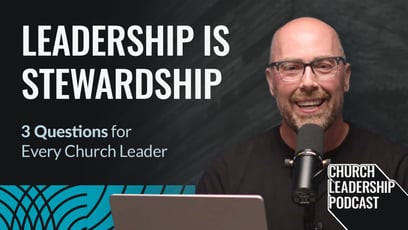
Photograph of John McGee, Executive Director of Watermark Resources in front of a mic, and laptop in the Church Leadership Podcast studio at Watermark Community Church.
Episode: 209Sep 17, 2026
3 Questions to Help You Steward What You Lead | John McGee

About this Episode Leadership is stewardship. In this episode of Church Leadership Podcast, John McGee shares a simple exercise he recently used with his team to evaluate what God has entrusted to them. It's broken down into three questions: What could be excellent? What should be expanded? What needs to end? John shares why leaders can't settle for simply keeping things running, how listening to the people closest to the work can bring clarity, and why good stewardship requires leaders to turn ideas into action.

Church Leadership
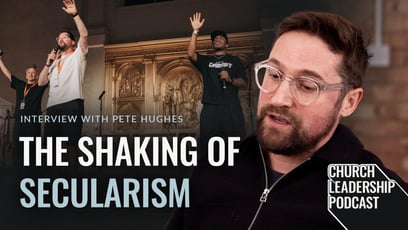
Image of Pete Hughes, Lead Pastors at KXC (Kings Crossing Church), being filmed at an interview about the Church movement in the United Kingdom.
Episode: 208Sep 2, 2026
The Shaking of Secularism | An Interview with Pete Hughes

About this Episode Pete Hughes, pastor of King's Cross Church in London, joins the Church Leadership Podcast to talk about what he calls “the shaking of secularism and the search for a savior.” Pete shares how he's seeing a growing spiritual openness among younger generations, and how church leaders can respond. Tune in to be encouraged by how God is at work in the UK, and how Pete is learning to relinquish control so that the Lord can work in his church and city. Watch the full film with Pete and more United Kingdom church leader interviews on YouTube here: Awakening in the UK

Church Leaders Conference

Church Leadership

Next Generation

Evangelism & Missions

Church Culture
Is the UK Becoming Pre-Christian? | Stephen Foster image
Episode: 207Aug 19, 2026
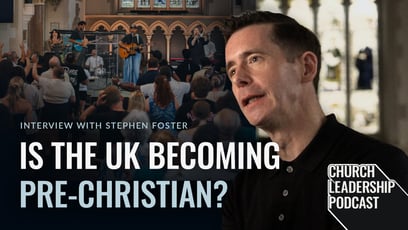
Is the UK Becoming Pre-Christian? | Stephen Foster

About this Episode What if the next generation is more open to Jesus than we think? In this episode of the Church Leadership Podcast, John McGee shares an extended interview with Stephen Foster, leader of of St. Aldates Church in Oxford, England. Stephen talks about the shift he’s seeing in the UK, why churches should intentionally invest in younger leaders, how an invitational culture can change a church, and what it looks like to trust the Holy Spirit as people explore Christianity. Watch the full film on YouTube here: Awakening in the UK

Church Leaders Conference

Church Leadership

Next Generation

Evangelism & Missions

Church Culture

Stay equipped

Keep up-to-date with news and updates on our latest podcast episodes, blog articles, and conferences by subscribing to our newsletter.