Episode 76Nov 09, 2020

How We Think About Women in Leadership

John McGee
John McGee
How We Think About Women in Leadership image
On this episode of the Church Leadership Podcast, Caitlin Sterlacci (Executive Director of Communications) joins Adam and John in the studio to discuss women in church leadership and why the church should be an incredible place for women to utilize their gifts.


Episode Summary

In this episode of the Church Leadership Podcast, Caitlin Sterlacci (Executive Director of Communications) joins Adam and John in the studio to how they think about women in leadership on a church staff. They cover the practicalities, nuances, and high-level philosophies to operate from. For a more theological deep dive into the roles of men and women in church leadership, check out this message from David Leventhal and this one-page PDF on the role of women in the church. Both given a phenomenal overview of some of the foundational theology that informs how we think about women leading in the church.

Three Grey Areas to Consider for Women in Church Leadership

1. Where Is The Ceiling?

Your church should be an environment where women on your staff can excitedly tell their female friends, "You would love working here!" If you are a women looking for how you can be involved with leadership at your church, avoid pre-determining or assuming where ceilings exist. Instead, humbly ask questions and clarify the boundaries. Don't limit yourself or say other people's "no" for them.

If you are a man already in leadership at your church, then it is your responsibility to advocate for women on your team and make sure you are not showing favoritism. For any role or opportunity on your staff not exclusively limited by Scripture to men (i.e. Elder, Pastor/Shepherd), women should be given the same footing as men for consideration and inclusion. Don't let any ceiling exist by accident or assumption.

For women hoping to lead at their church, don't just wait for someone else to advocate for you. Own your own development. Find the specific things you are interested in growing in, and then start a conversation about how your leaders can champion and support you.

2. Being Assertive

Recognize that there may be some insecurities for women in church leadership. Often when women try to be assertive, they are met with criticism or rebuke. Nevertheless, that is why it is important to have a bent neck and a stiff spine. Or, in other words, be humble and be courageous. Offer criticism and input with humility and boldness. Take risks, push through the insecurity, and make your voice heard. Understand that if it doesn't go well, you can learn from your mistakes and ask for feedback.

Remember that regardless if you are a woman or man in leadership, trust in leadership will be earned. You may need to work to improve the helpfulness of your input and feedback as you work to be assertive. Also, it is a truly a shame that too often women are called "bossy" or "overbearing" for simply seeking to lead effectively. When in doubt, clarity can counteract insecurity. In instances of potential conflict, seek clarity, ask questions, and understand that there may be a difference in perception between men and women.

3. Navigating Boundaries

It would be unwise to not recognize that the intersections of personal, vocational, and spiritual life can make working for a church complicated. When it comes to communication, it can be incredibly helpful to set up intentional boundaries with those of the opposite sex and make it a point to become friends with the spouses of your married co-workers. Rules and boundaries help to prevent indiscretion. Remember that your staff are composed of brothers and sisters in Christ. If anywhere boundaries should work well, it should be the church.


If you have questions, comments, or suggestions for future episodes of the Church Leadership Podcast, email us at clp@watermark.org.

Keep Exploring

Explore more articles and podcast episodes related to this topic.

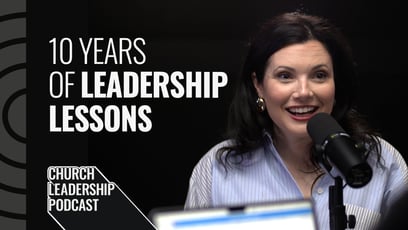
Caitlin Sterlacci sitting at a table in the Watermark Community Church, Church Leadership Podcast studio speaking into mic.
Episode: 213Nov 11, 2026
10 Years of Leadership Lessons | John McGee and Caitlin Sterlacci

About this Episode After 10 years at Watermark Community Church, Caitlin Sterlacci has learned a few hard lessons. In this episode of Church Leadership Podcast, she joins John McGee to reflect on her leadership journey, including: The leadership mistakes that changed how she manages her team. The hard feedback that helped her grow as a leader. The unexpected lessons God taught her through challenging seasons in ministry. From hiring decisions to leading through change, Caitlin shares practical wisdom she wishes she'd known sooner.

Church Leadership

Staff & Teams

John McGee sits in front of a mic and laptop in the Church Leadership Podcast studio at Watermark Community Church in Dallas, Texas
Episode: 212Oct 28, 2026
AI and the Church: 3 Questions for Church Leaders | John McGee

About this Episode AI is changing how people find answers, build relationships, and seek guidance. How can your church prepare? In this episode of Church Leadership Podcast, John McGee shares three questions to help church leaders think beyond sermon prep and productivity: What will be scarce? What’s scary? And what’s possible? He explores the growing need for meaningful community and connection with God, the challenges AI could bring to the people you shepherd, and opportunities to free up resources for ministry. Through it all, he offers a reminder: Jesus still holds all things together. Listen in, then bring these three questions to your next team meeting.

Church Leadership
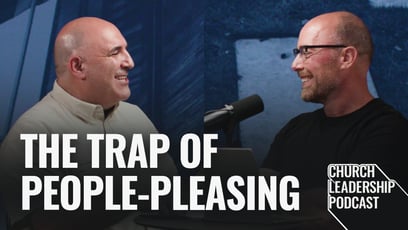
John McGee and Scott Kedersha of Watermark Community Church sitting at podcast table in front of microphone in podcast studio with blue graphic wall background.
Episode: 211Oct 15, 2026
The Trap of People-Pleasing | John McGee and Scott Kedersha

About this Episode In this episode of Church Leadership Podcast, John McGee is joined by Scott Kedersha to discuss how people-pleasing affects church leaders. Scott shares how his desire for approval led him to overwork and compromise his convictions, while John reflects on his struggle with criticism of his work. They discuss how to recognize what drives the need for approval, have difficult conversations, and find rest in what Jesus has already done.

Church Leadership

Stay equipped

Keep up-to-date with news and updates on our latest podcast episodes, blog articles, and conferences by subscribing to our newsletter.